The cheapest roof is rarely the one with the lowest quote. It’s the one that matches how long you’ll own the house, what the sky above it tends to throw down, and what your roof framing can actually carry. Beyondexteriors, a Chantilly roofing company that installs asphalt, metal, slate, synthetic, wood shake and flat systems across the region, is a good reminder that no single material is right for every home here. The right pick depends on the questions you answer before anyone mentions price per square.
Here’s a quick look at what’s available, with rough lifespans under typical Northern Virginia conditions and reasonable upkeep.
- Architectural asphalt shingles usually last 20 to 30 years.
- Standing seam metal often lasts 40 to 70 years.
- Natural slate can last 75 years and often well past a century.
- Synthetic slate and shake products generally carry warranties of 40 to 50 years.
- Cedar shake lasts 25 to 35 years with regular maintenance, less without it.
- Low-slope membranes such as EPDM, TPO and modified bitumen usually last 20 to 30 years.
Those numbers are only a starting point. The real decision comes from your own circumstances.
When the House Is a Five-Year Stop
If you expect to sell within a few years, the math leans heavily toward asphalt. Buyers in Fairfax and Loudoun expect architectural shingles, appraisers rarely give full credit for premium materials, and the payback on metal or slate depends on being around to enjoy it.
That doesn’t mean picking the cheapest shingle on the truck. A new roof is a selling point only if it’s documented, so keep the manufacturer warranty registration and the installation details. Some shingle warranties transfer to a new owner once, usually within a set window after closing and sometimes for a fee. That paperwork can count for more at the closing table than the shingle brand.
When Hail Is the Thing That Keeps You Up
Hail doesn’t hit Northern Virginia as often as it does the Plains, but summer thunderstorms bring it often enough that insurance adjusters stay busy here. An “impact resistant” label on the bundle isn’t the whole story. Shingles are labeled Class 3 or Class 4 under the UL 2218 standard, which uses steel balls, while the Insurance Institute for Business and Home Safety tests with laboratory-made hailstones that behave more like the real thing. Its hail impact shingle ratings show that products with the same label can perform very differently, and the polymer-modified asphalt shingles have generally done better than older impact designs.
Metal is the other answer to hail, with a catch. Standing seam panels rarely leak after a hailstorm, but softer metals and thinner gauges can dent, and dents are cosmetic damage many policies treat differently. Ask how your insurer handles cosmetic damage before you assume metal settles the question.
Some insurers offer premium credits for Class 4 roofs. Others don’t. A quick call to your agent before choosing materials costs nothing and occasionally covers part of the upgrade.
When the Roof Has Tricky Geometry
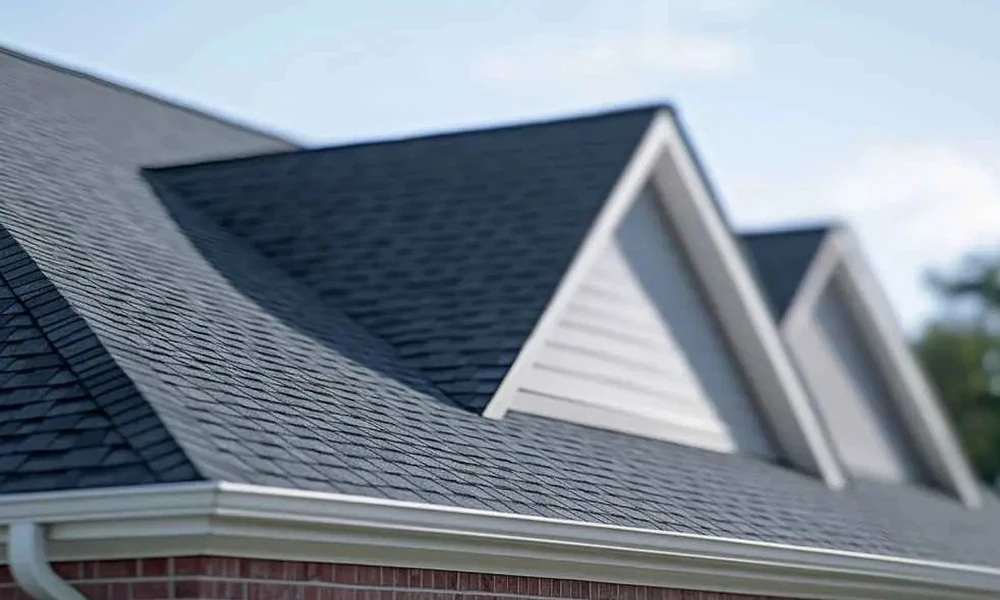
Steep roofs with dormers, turrets and intersecting valleys favor materials that bend with the shape. Asphalt handles complicated lines easily and cheaply. Metal can be beautiful on simple gables and long runs, but every hip, valley and penetration means custom bending, and the price climbs with each one.
Low-slope sections are where homeowners get into trouble. Covered porches, rear additions, sunrooms and the flat sections over some townhome bays often sit at a pitch too shallow for shingles. Shingles shed water by gravity, so when water sits on a shallow slope it backs up under the laps. Those areas need a membrane instead. EPDM is a durable black rubber sheet. TPO is a white single-ply membrane that reflects summer heat. Modified bitumen comes in rolls and holds up well to foot traffic. A good crew changes material at the slope transition and flashes the joint carefully, because that seam is where leaks usually start.
When the HOA Has the Final Word
Many communities around Chantilly, Centreville and South Riding control roof color and sometimes material through architectural review. Natural slate and cedar shake are often approved without fuss in older, larger-lot neighborhoods, while townhome associations tend to require a specific shingle line and color so the whole row matches.
Synthetic slate and shake can solve that conflict well. Made from engineered polymers and recycled materials, they look like the real thing from the street, weigh a fraction of natural slate, and don’t split, rot or attract the moss that grows on north-facing cedar under heavy tree cover. Bring a sample and the manufacturer’s specification sheet to the review committee. Approvals move faster when the board can hold the product in their hands.
When You Want This to Be the Last Roof
Slate is the obvious candidate, and in the right setting it lasts longer than the homeowner. The limitation is weight. Natural slate can weigh several times as much as asphalt per square, so framing built for shingles may need to be evaluated by an engineer and possibly reinforced. Repairs also call for someone experienced with slate, since walking on it carelessly breaks pieces, and matching weathered slate takes salvage sources and patience.
Standing seam metal is the more practical long-term choice for most homes. The concealed fasteners keep screws out of the weather, the panels shed snow easily, and reflective finishes reduce attic heat during long July heat waves. The common worry about rain noise mostly disappears when the metal goes over solid decking with underlayment and the attic is properly insulated.
The Layers Nobody Photographs
Whatever goes on top, the materials underneath decide a lot of how it performs. In this climate, with freeze-thaw cycles and snow that melts and refreezes at the eaves, ice and water shield along the eaves and valleys is well worth the cost. Synthetic underlayment holds up better than old felt paper if rain arrives mid-job. Balanced intake and exhaust ventilation keeps attic heat from aging shingles from below and stops winter condensation from soaking the decking.
A modest asphalt roof over a properly built system of underlayment, flashing and ventilation will outlast an expensive material installed carelessly. When you compare proposals, the attention given to those hidden layers is often the clearest sign of whether a material will actually reach the lifespan on its brochure.