Along the Gulf Coast, most people pick shutters on a sunny afternoon, looking at photos and color samples. The real verdict comes later, when a forecast cone swings toward Louisiana or Mississippi and someone in the house has to close every opening before the wind picks up. That moment exposes differences no brochure mentions, like how long each shutter takes to secure, who can physically manage it, and what it does to the house once the storm has passed.
Homeowners sorting through those differences often start with regional installers who have seen several decades of storms up close. Direct Source Renovations, working out of Harahan since 1992, fits roll-down, accordion, Bahama, colonial and board and batten shutters on homes from New Orleans and Baton Rouge out to Gulfport, Mobile and beyond. Whoever ends up doing the work, the smarter way to choose is to picture the shutter at four separate points in its life, because each style passes some of those tests easily and struggles with others.
Months Before Anyone Mentions a Storm Name
The first test happens long before hurricane season, during measuring and planning. Every window and door is its own small project. A brick veneer wall holds anchors differently than vinyl siding over wood framing, and a tall arched window may rule out an accordion track entirely. Historic neighborhoods add another layer. In much of New Orleans, exterior changes in designated districts need sign off from the Historic District Landmarks Commission, which is one reason colonial and board and batten styles stay popular there. They look like they belong on a shotgun house or a Creole cottage.
This is also the moment to settle a few hard questions for every opening.
- whether the shutter product has been tested for windborne debris impact under standards such as ASTM E1886 and E1996, not just described as “storm ready”
- what the mounting surface is made of and how far the anchors will reach into solid framing
- which bedroom windows need to stay operable as an emergency exit
- how the shutter will be stored, if it is a removable type, and where that storage space actually is
Skipping these questions is how people end up with decorative shutters that look protective but were never built to take a hit from a flying patio chair.
When the Watch Becomes a Warning
The second test is speed. A hurricane watch usually gives about 48 hours of notice, and a warning narrows that to roughly 36. Those hours fill up fast with fuel, groceries, medications and moving the car to higher ground. Shutters that take a full afternoon to deploy tend to get rushed or skipped.
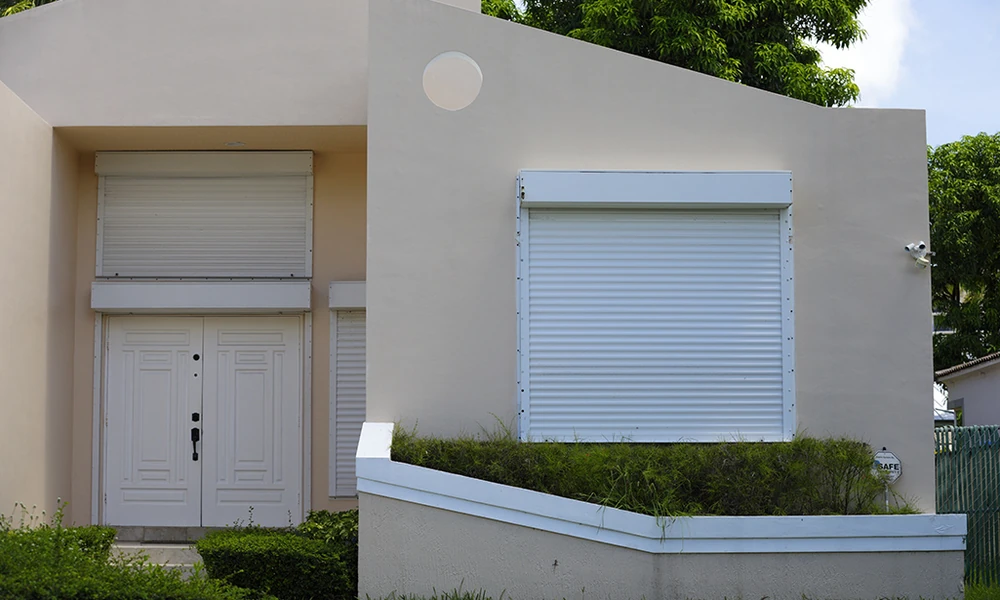
Roll-down shutters win this round almost every time. A motor or hand crank lowers interlocking aluminum slats in under a minute per window, and nobody climbs a ladder. The catch is power. Storms often knock out electricity before the worst winds arrive, so a motorized unit needs a manual override that the household has actually practiced using.
Accordion shutters come next. The panels stay folded beside the window all year, then slide closed along a track and lock in the center. One person can close a whole house in an hour or so, though stiff tracks slow things down if they were never cleaned.
Bahama shutters already hang over the window as awnings, so closing them means unhooking the prop arms, lowering the panel and pinning it shut. Colonial and board and batten styles swing inward like doors and latch with a storm bar. Both are quick on the ground floor. On a second story, though, they can mean leaning out of an upstairs window in gusting wind, which is worth thinking through before buying.
The fallback option, plywood, is still recommended when nothing permanent is in place. The National Weather Service suggests 5/8 inch exterior grade or marine plywood cut to fit ahead of time, and its guidance treats permanent storm shutters as the stronger choice. Anyone who has hung plywood in August heat knows why.
Holding the Line Once the Wind Arrives
The third test is the one people imagine first. During the storm itself, a shutter has two jobs. It has to stop debris from breaking the glass, and it has to keep wind from pouring into the house. That second job matters more than it sounds. Once a window or garage opening fails, air rushes inside and pushes up on the roof from below while the wind outside pulls on it from above. Many of the worst roof losses start with a single broken opening.
How well a shutter holds depends less on its style and more on its rating and installation. A tested roll-down or accordion system with correctly spaced anchors performs reliably. Bahama and colonial shutters can be just as strong when they are built as rated storm products, but purely decorative versions offer little more than shade. Fasteners are the weak point in most failures, especially when they are driven into soft siding instead of solid framing.
There is a human side to this stage too. A fully shuttered house is dark, and with the power out it can feel sealed. Keeping at least one clear exit route, and a flashlight near it, matters if a fire or a falling tree forces the family out.
The Long Stretch Between Storms
The final test runs the longest. Most of a shutter’s life is spent on ordinary days, sitting in humid, salty air. Coastal moisture corrodes cheap hardware, and grit packs into tracks. A rinse with fresh water every few months, a silicone based lubricant on moving parts and a look at every screw head for rust stains will keep most systems working. After any storm, check for bent slats, cracked panels and loosened anchors before the next one forms.
Here the styles separate again. Bahama shutters earn their place daily by shading windows and cutting afternoon heat on west facing rooms. Roll-downs double as security and noise control when lowered at night. Colonial and board and batten designs mostly work on curb appeal, which matters in older neighborhoods and at resale. Accordions are the least attractive and the most practical, often chosen for side and rear windows where looks matter less.
Insurance is the last piece of this stage. Many Gulf Coast insurers recognize documented opening protection when setting wind premiums, so keeping invoices, product approval paperwork and dated photos of the installed shutters can pay off long after the job is finished.
Matching the Shutter to the Person Closing It
Looking at shutters this way usually changes the decision. A retired couple in a two story house may care far more about a roll-down they can lower from inside than about how the exterior photographs. A family in a raised Creole cottage might mix colonial shutters on the street side with accordions in back. A homeowner who travels during storm season may want something a neighbor can close in minutes. The best choice is rarely one style for every window. It is the combination that the people living there can actually close, trust through the night and maintain for years without thinking twice about it.