Storms can topple even the healthiest of trees. And when that happens, determining who’s responsible for paying for tree removal can be tricky.
Generally speaking, you’re responsible for taking care of any trees on your property, and that includes trees that extend into neighboring yards. Ownership is typically determined by where the trunk of the tree is located, regardless of where the branches may hang over.
So, what happens if a tree falls on your home or property? And who’s responsible for paying for tree removal and repair costs after a storm?
If a healthy tree on your neighbor’s property falls onto your property during a storm, your neighbor is most likely not legally responsible for the damages. Storms are typically considered an act of God and are not usually considered negligence. In that case, it’s likely that each neighbor would be responsible for dealing with the damage on their own property and file a claim with their respective insurance companies.
However, if a tree on your neighbor’s property that you’ve reported as being dead or unhealthy falls onto your property and causes damage, your neighbor may be held liable for damages. In that case, they may have to pay for tree removal and your repair costs. Talk to your neighbor and your insurance company to figure out next steps.
If a tree straddles the property line between your home and a neighbor’s and a storm splits the tree in half, each neighbor would be responsible for removing the portion of the tree on their side of the property line.
What Insurance May Cover
If you need to file a claim with your homeowner’s insurance company for tree removal, understand that not all trees and situations qualify for coverage. Your policy may cover the removal process if a fallen tree has blocked entryways or damaged covered structures on your home. However, insurance likely won’t cover the removal of a downed tree if it fell onto an open space in your yard.
Basic tree removal services typically cost between $500 and $2,500 and can vary widely based on the size of the tree, accessibility, and equipment and debris hauling needs.
When a Neighbor’s Tree Looks Unsafe
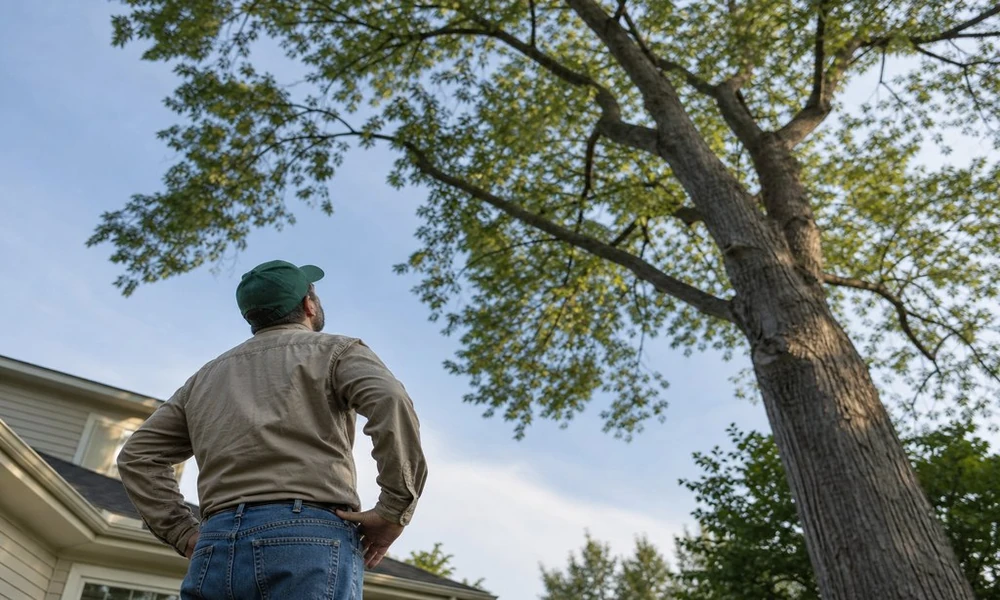
If you spot a tree on your neighbor’s property that looks dead or otherwise unhealthy, lean towards erring on the side of caution and let them know. You never know when that tree could fall onto your home during a storm and cause costly damages.
If the tree is leaning toward your property or is growing on the property line between your homes, take pictures to document its condition. Send your neighbor a written notice about the tree and ask them to have it inspected by a licensed arborist. Keep a copy for your records.
If the tree does fall onto your home and cause damages, an insurance adjuster will likely ask to see the photos you took and other documentation. Depending on the extent of the tree’s unhealthy state, weather conditions at the time of the fall, and other factors, your neighbor’s insurance company may deny the claim.
Sharing a Tree on the Property Line
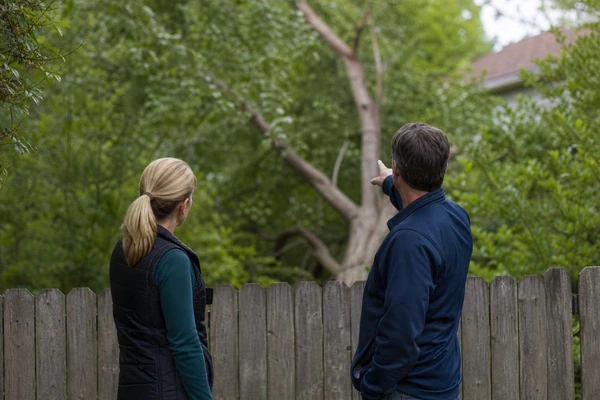
If a tree is growing right on the property line between your house and a neighbor’s, you technically share ownership of the tree. That means you can’t remove the tree without first talking to your neighbor, especially if the removal process could negatively impact the tree’s health and stability, such as trimming near the roots or main trunk.
If you and your neighbor agree to have a tree on your shared property line removed, you’ll need to decide how to split the removal costs and resolve who pays to remove a tree on residential property before scheduling the work. Depending on the health of the tree, location, and other factors, one neighbor may end up taking on more of the financial responsibility. Alternatively, each neighbor can try filing a claim with their homeowner’s insurance companies.
What to Do After the Storm
Following a severe storm like those covered by Climate.gov https://www.nssl.noaa.gov/education/svrwx101/thunderstorms/, take pictures of the fallen tree’s condition, including any visible signs of decay or disease, as well as where the trunk and branches have fallen. Save copies of any conversations you had with your neighbor about the condition of the tree. Get estimates from licensed tree removal professionals to remove the tree from your property, noting if stump grinding and removal services are offered separately. Keep copies of these estimates.
Get the name and contact information of the homeowner the tree belongs to as well as their homeowner’s insurance company.
If a tree has fallen onto your roof or other structures, or is tangled up in power lines, call your insurance company to report potential damages before having the tree removed. Avoid climbing onto your roof or performing any other DIY tree removal services until you’ve been given the all-clear by your insurance company.
Keep in mind that if your neighbor’s tree falls onto your property during a storm and the tree was previously healthy, both of you will likely be responsible for paying your own insurance deductibles. If your neighbor’s tree was dead or you previously notified your neighbor that the tree looked unhealthy, however, you may be able to collect on your insurance policy and have your insurance company seek reimbursement from your neighbor’s policy.