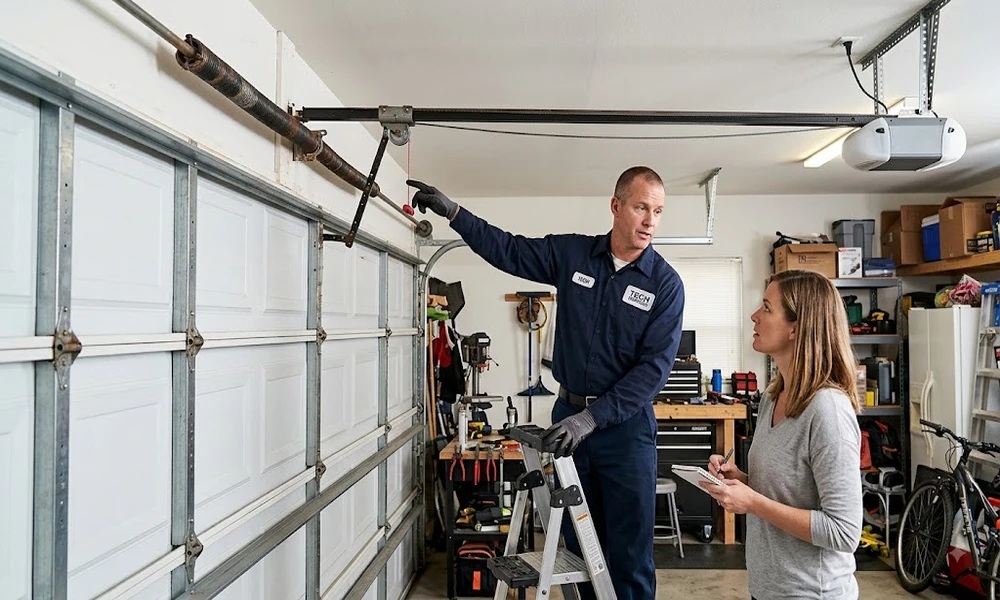
A garage door system is made up of several mechanical and electrical components that work together to provide safe and reliable operation. Like any frequently used system, these parts experience wear over time and will eventually need maintenance or replacement. Understanding the typical lifespan of garage door components can help homeowners recognize signs of wear, schedule preventive maintenance, and reduce the risk of unexpected breakdowns.
Garage Door Springs
Springs do most of the heavy lifting whenever the garage door opens or closes. Torsion and extension springs are typically rated for a specific number of operating cycles, with one cycle consisting of a full opening and closing of the door. Homes that use the garage door multiple times each day may see springs wear out sooner than those with lighter usage. When springs begin to weaken, the door may become difficult to lift or operate unevenly.
Rollers and Hinges
Garage door rollers and hinges allow the door to move smoothly along its tracks. Over time, these components can wear due to friction, dirt buildup, and regular use. Worn rollers may become noisy or cause the door to move unevenly. Regular lubrication and periodic inspections can help extend their service life and maintain smooth operation.
Cables
Garage door cables work together with the springs to safely raise and lower the door. Although they are built for durability, cables may eventually show signs of fraying, corrosion, or wear. Because damaged cables are under significant tension, they should be inspected and replaced only by qualified professionals.
Tracks and Hardware
The tracks, brackets, and mounting hardware support the garage door throughout its movement. While these components often last for many years, loose bolts, bent tracks, or accidental impacts can affect alignment and performance. Routine inspections help identify problems before they interfere with normal operation.
Garage Door Opener
The garage door opener is the system’s primary electrical component. With regular maintenance, many openers provide years of dependable service. However, motors, drive systems, circuit boards, and safety sensors can gradually wear out or develop faults. If the opener becomes unreliable or struggles to operate the door, professional servicing may be necessary.
Routine Maintenance Extends Component Life
Regular maintenance is one of the most effective ways to maximize the lifespan of garage door components. Lubricating moving parts, tightening loose hardware, testing safety features, and scheduling periodic professional inspections can reduce unnecessary wear and help identify developing issues early.
Final Thoughts
Every garage door component has a limited lifespan, but proper care can significantly extend its performance. By understanding how each part functions and recognizing the signs of normal wear, homeowners can make informed maintenance decisions, improve system reliability, and help ensure their garage door operates safely and efficiently for years to come.
This article was written by a professional at 1 Stop Garage Doors. 1 Stop Garage Doors proudly serves homeowners and businesses with top-quality garage door installations and repairs. We install premium doors and openers from trusted brands, ensuring reliability and customer satisfaction. Our expert team provides cost-effective solutions, arriving with fully stocked trucks to handle repairs on the spot, including torsion spring replacements, drum and roller fixes, and general maintenance to keep your garage door functioning smoothly.